God is Good Bow
A Designer’s First Glance: Sweet, Sincere, and Stitch-Ready
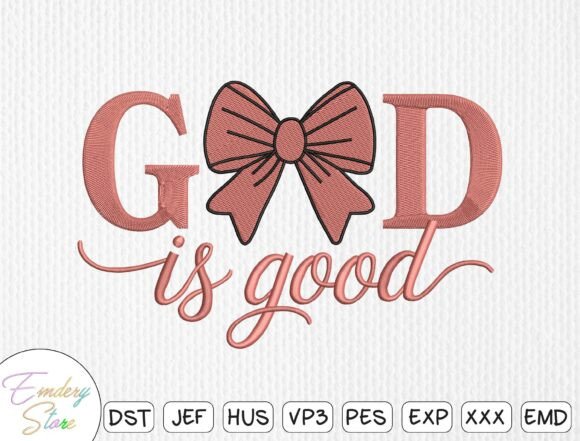
When God is Good Bow opened on my screen, I didn’t see just another religious embroidery file—I saw a quiet moment of warmth. The bow is soft-edged, not fussy; the lettering is rounded and legible without being cutesy; and the overall shape feels intentional—not too wide, not too tall—like it was drafted with real fabric in mind. It lands somewhere between heartfelt and approachable: warm enough for a baby onesie, polished enough for a boutique apron, and grounded enough to avoid looking like generic clip art. As a designer who’s stitched hundreds of faith-based pieces for clients and craft businesses, I immediately asked: *Where would this live best—and where might it need extra care?*
Real Project Test: A Linen Kitchen Towel for a Local Gift Shop
Last week, I prepped God is Good Bow for a small-batch run of embroidered tea towels—linen blend, medium weight, destined for a downtown gift shop that specializes in meaningful, handmade home goods. I chose it because it reads clearly at 3.5 inches wide, holds its shape without heavy fill stitches, and carries emotional resonance without leaning into overt symbolism. Customers there respond to sincerity over spectacle—and God is Good Bow delivers exactly that. After stitching, the bow held its curve beautifully, the “God is Good” text stayed crisp (no thread nesting or letter collapse), and the satin-stitched ribbon edges gave just enough shine without looking plasticky. It felt like a finished product—not a placeholder design.
Where It Shines (and Why)
- Custom apparel: Works cleanly on sweatshirts and lightweight crewnecks—especially when centered above a pocket or on the chest. The moderate stitch density prevents puckering on mid-weight knits.
- Tote bag design: Looks balanced on natural canvas or cotton duck—neither lost nor overwhelming. The bow’s gentle asymmetry adds visual interest without competing with the bag’s structure.
- Baby embroidery: Soft curves and open spacing make it ideal for onesies and burp cloths. No tiny details that vanish after washing, no sharp corners that irritate delicate skin.
- Embroidered patch: Clean outer edge and consistent stitch direction mean it’ll peel-and-stick cleanly or sew-on smoothly—great for church volunteer vests or Sunday school tote kits.
- Holiday embroidery & personalized gifts: Paired with neutral thread (heather gray, oatmeal, navy), it reads quietly reverent—not seasonal, but timeless. Perfect for Christmas stockings, Easter pillow covers, or baptismal blankets.
Use With Thought—Not Avoidance
This isn’t a “set and forget” design—but that’s not a flaw. It’s a sign it was made for real use. Here’s where attention pays off:
- Small hoop sizes: At under 4 inches wide, it fits comfortably in a 4x4 hoop—but double-check that your machine handles the bow’s inner curve without jumping stitches. Always test on scrap first.
- Textured fabrics: On burlap or heavy linen, reduce top tension slightly and add tear-away + cut-away stabilizer combo. The bow’s satin-stitched loops can catch on loose weaves if stabilization is light.
- Dark fabric: Light-colored thread (ecru, pale gold, soft white) reads warmly—but avoid stark white on black unless you want high contrast. Test thread color against your fabric in natural light.
- Curved surfaces (caps, hats): The bow’s gentle arc helps—it’s more forgiving than rigid geometric shapes—but still requires proper cap frame hooping and reduced stitch speed.
- Frequent-wash items: Reinforce with quality polyester thread and secure jump stitches. The design avoids ultra-fine lines or isolated dots, so durability stays strong across wash cycles.
What It Adds to Your Handmade Product—Beyond the Stitch
As an Etsy seller and small shop owner myself, I know customers don’t just buy embroidery—they buy intention. God is Good Bow supports that. It elevates a plain kitchen towel into something someone proudly hangs in their kitchen. It turns a basic sweatshirt into a quiet statement piece—not preachy, but present. For craft fairs, it pairs well with neutral palettes and natural materials, reinforcing brand consistency without shouting. And for digital product sellers? It’s a clean, licensable asset—simple enough to preview well in printable mockups, distinctive enough to stand out in a crowded Religion Amp category.
Practical Designer Notes You’ll Actually Use
- Test God is Good Bow on scrap fabric *before* cutting your good material—especially if using textured, stretchy, or dark fabric.
- Review stitch density in your embroidery software. If fill areas look overly dense, consider reducing density by 5–8% for breathable fabrics.
- Check small details: Are bow loops fully connected? Does the “G” in “God” hold clarity at 3 inches? Zoom in before sending to your machine.
- Mock it up in black and white—this reveals contrast issues and readability gaps faster than color previews.
- Use appropriate stabilizer: Cut-away for knits, tear-away for stable wovens, and fusible + tear-away for lightweight linens.
- Confirm licensing terms directly with the source—especially if planning commercial embroidery, resale of finished items, or bundling as part of a digital embroidery collection.
Final Thought: A Design That Respects the Maker and the Message
God is Good Bow doesn’t try to do everything—and that’s its strength. It’s not flashy. It’s not overloaded. It’s thoughtfully paced, respectfully scaled, and quietly confident in its purpose. Whether you’re stitching for a client’s custom order, building inventory for your craft business, or choosing a design that reflects your own values in a tangible way, it meets the work with integrity. It’s the kind of machine embroidery design that makes people pause—not because it shouts, but because it settles in, gently, like something true.