The Last Supper 3D Relief CNC Model: 2D Art
First Impression: A Weighted, Textured Narrative
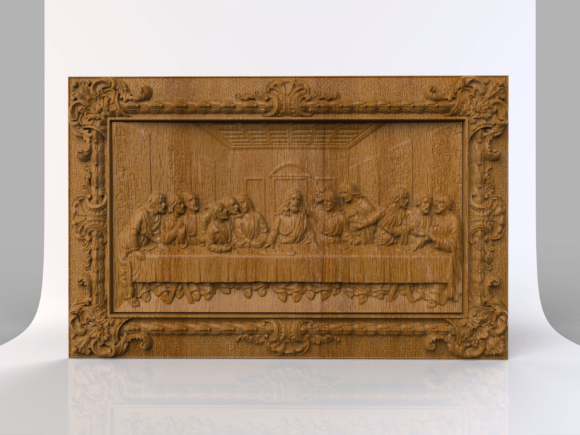
Opening the file for The Last Supper 3D Relief CNC Model, I immediately felt its presence—not as flat clipart, but as a dimensional artifact translated into 2D space. The subtle elevation lines, engraved contouring, and layered depth cues suggest CNC milling without overloading the eye. It reads as reverent yet tactile, classical yet engineered—ideal for a client project rooted in craftsmanship: a boutique religious goods shop launching a Lenten collection, a handmade candle brand with sacred geometry motifs, or an art-focused print-on-demand store curating devotional wall art.
Where This Graphic Design Asset Earns Its Place
This isn’t background filler. The Last Supper 3D Relief CNC Model excels where visual storytelling meets material authenticity. In packaging design, it adds gravitas to product labels for artisanal olive oil or hand-poured sacramental candles—its relief texture implies care, tradition, and physical making. As a hero graphic on a website banner or Instagram post, it anchors seasonal campaign visuals with quiet authority. For printable designs like liturgical planners or church event invitations, it serves as both focal point and decorative frame—especially when paired with serif fonts that echo historical typography.
It performs exceptionally well in:
- Product mockups (wooden box lids, ceramic mug wraps, linen tote bags)
- Themed Canva templates for faith-based small business branding
- Cricut projects requiring layered vinyl cut paths or embossed paper accents
- Editorial design for Catholic or ecumenical publications seeking non-photographic reverence
- Social media graphics where emotional resonance matters more than trend-chasing
- Sticker design and sublimation design for niche Etsy products targeting collectors or educators
Real-World Limitations Every Designer Must Acknowledge
Let’s be precise: this is not a universal asset. The Last Supper 3D Relief CNC Model loses clarity below 300px width—it’s not built for favicon use or app iconography. In crowded layouts—say, a busy festival flyer with five competing elements—it recedes instead of commanding. On low-contrast backgrounds (e.g., light gray over off-white), its subtle depth vanishes. And crucially, it clashes with minimalist branding systems: pairing it with ultra-thin sans serifs or monochrome corporate identities creates visual dissonance, not harmony.
Avoid using it in:
- Professional corporate reports or investor decks
- Small-scale merchandise like enamel pins or keychains
- Branding where neutrality or secular universality is required
- Any context demanding immediate, unambiguous readability at arm’s length
How It Shapes Perception—and Why That Matters to Clients
Visual hierarchy shifts the moment you drop The Last Supper 3D Relief CNC Model into a layout. Its implied weight slows the viewer’s pace. That’s powerful for spiritual or reflective messaging—but risky if your client’s goal is energetic conversion or playful engagement. It boosts visual trust by signaling intentionality and craft, especially for handmade business audiences who value process transparency. Yet it also narrows audience reach: while deeply resonant for faith-aligned consumers, it may alienate secular or interfaith contexts unless thoughtfully contextualized.
For print-on-demand sellers, its emotional appeal translates directly to perceived value—customers pay more for designs that feel *made*, not generated. For bloggers and content creators covering sacred art history or liturgical design, it becomes a reliable, licensable anchor image—far more distinctive than generic royalty-free illustrations.
Practical Designer Notes Before Client Deployment
Before embedding The Last Supper 3D Relief CNC Model into any commercial design, run these checks:
- Test in black and white: Does the relief reading survive desaturation? (It does—but only if contrast is preserved.)
- Preview on real mockups: Place it on a wooden crate mockup and a matte ceramic mug—does the texture complement or compete?
- Check file formats: Confirm SVG scalability and PNG transparency integrity—critical for sticker design and web design flexibility.
- Compare font pairings: It harmonizes with Garamond and Playfair Display, fights with Helvetica Neue, and overwhelms handwritten fonts unless used as a subtle watermark.
- Verify commercial license: Ensure redistribution rights cover your client’s use case—especially for digital product bundles or Canva template resale.
- Print test at 300 DPI: Does fine line work hold on uncoated paper? (Yes—if output resolution and RIP settings are calibrated.)
Final Verdict: A Niche, High-Value Creative Design Tool
The Last Supper 3D Relief CNC Model is not mass-market clipart. It’s a considered 2D Art interpretation of a sculptural concept—designed for designers who understand that meaning lives in materiality. For the right client—a small business branding project centered on heritage, contemplation, or tactile devotion—it elevates marketing visuals from competent to resonant. Used without intention, it feels heavy-handed. Used with discipline—as part of a cohesive brand identity system, paired with thoughtful typography and restrained color—it becomes a quiet signature. In a saturated creative marketplace, that kind of distinction is rare. And valuable.